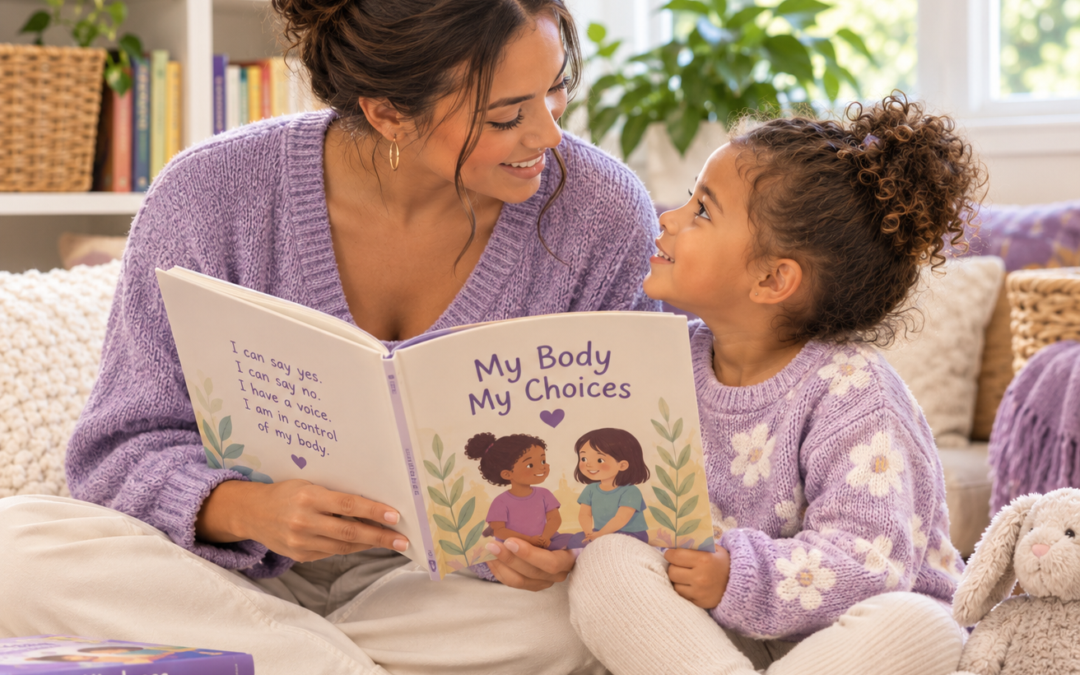
Consent can feel like a big concept, but at Educated Nannies, we believe that teaching children about consent can begin with very small, everyday moments. From asking before giving a hug to helping a toddler understand that they can say “no” to a game, children are constantly learning about boundaries, bodily autonomy, communication, and respect. These lessons do not need to feel complicated or intimidating. In fact, some of the most meaningful conversations about consent happen naturally during play, caregiving routines, family gatherings, and everyday interactions.
For parents and professional nannies, teaching consent is ultimately about helping children understand a simple but powerful message: your body belongs to you, other people’s bodies belong to them, and we can all communicate about what feels comfortable to us.
As children grow, their understanding of consent will naturally become more sophisticated. What begins with responding to an infant’s cues eventually becomes learning to ask before hugging a friend, understanding that “stop” means stop right now, communicating personal boundaries, and respecting the boundaries of others. The goal is not to have one big conversation about consent. Instead, it is to create a culture of respect that children experience consistently throughout childhood. Ultimately, as they grow, when consent and respect are the foundation, they will know and feel when others do not value them. The goal is not only to protect themselves, but to speak up for and protect others as well.
What Does Consent Mean for Children?
For young children, consent can be introduced as the idea that they have a voice and appropriate choices about what happens to their bodies, while also learning that other people have the same rights.
Consent is not only a topic for older children or adults. It can be part of everyday childhood experiences. A child can learn that they can choose whether they want a hug, that they should ask before touching another person, that “stop” means stop, and that someone can change their mind about an activity.
It is equally important to teach children that consent works both ways. We want children to understand that their boundaries matter, while also learning that other people have boundaries that deserve respect.
For example, if a child asks a friend for a hug and the friend says no, the lesson is not that the friend was being rude. The lesson is that the friend communicated a boundary, and we respect it. A caregiver might simply say, “They don’t want a hug right now. That’s okay. You can say hello another way.” These small interactions help children understand that respecting boundaries is a normal part of healthy relationships.
Infants: Building the Foundation for Body Autonomy
Babies cannot verbally communicate consent, but that does not mean there are no opportunities to begin modeling respect for their bodies. During infancy, caregivers are laying the foundation through responsive caregiving. One simple way to do this is by narrating what you are doing. Before picking up a baby, you might say, “I’m going to pick you up now.” During a diaper change, you can explain, “I’m going to clean you and put on a fresh diaper.” When getting dressed, you might say, “Let’s put your shirt on.” Slow down and give the infant time to take in your words and actions and acknowledge your presence before you proceed.
You are not asking an infant for permission in the same way you would ask an older child. Rather, you acknowledge that the baby is an active participant in the interaction and give them predictable information about what is happening to their body.
Caregivers can also learn to pay attention to a baby’s nonverbal communication. Turning away, becoming tense, crying, reaching toward something, relaxing, smiling, or engaging with an interaction can all provide valuable information. Responsive caregiving means noticing those cues and responding appropriately whenever possible. This is an early lesson in bodily autonomy: my caregiver notices me, listens to my cues, and treats me with respect.
A simple example:
Instead of immediately picking up a baby who is reaching toward you, you might pause, make eye contact, and say, “Are you ready to come up?” Then, as you pick them up, you can narrate what you are doing. These moments may seem small, but they establish a pattern of respectful communication from the very beginning.
Toddlers: “Your Body Belongs to You”
The toddler years bring growing independence, and one word often seems to appear more than any other: “No!” While a toddler’s constant refusal can certainly test a caregiver’s patience, it can also provide an important opportunity to teach boundaries. Toddlers are beginning to understand that they are separate individuals with their own preferences, feelings, and ideas.
Whenever there is genuine flexibility, caregivers can offer simple choices. You might ask, “Would you like the blue shirt or the green shirt?” or “Would you like to walk to the bathroom or would you like me to carry you?” You can also offer choices around physical affection. Instead of assuming a child wants a hug, ask, “Would you like a hug, a high five, or a wave?”
At the same time, children need to learn that not every situation is optional. Safety and necessary caregiving sometimes require adults to step in. For example, a toddler may refuse to get into their car seat. A caregiver can acknowledge the child’s feelings while maintaining the necessary safety boundary: “You don’t want to get in your car seat. I hear you. It is time to get in, and I am going to help you.”
This distinction is important. Teaching consent does not mean allowing children to make every decision. It means giving children appropriate autonomy while adults continue to provide safety, structure, and necessary care. The underlying lesson is: your voice matters, and I will listen to you. I will also help keep you safe when needed.
Preschoolers: Learning to Ask, Listen, and Stop
Preschoolers are ready for more direct conversations about consent and personal boundaries. At this age, children can begin to understand simple concepts such as asking first, listening to the answer, and stopping when someone asks them to stop. Play provides a wonderful opportunity to practice these skills because children naturally interact with one another through games, pretend play, physical play, and imaginative activities.
Imagine one child wants to give another child a hug. Rather than simply saying, “Give your friend a hug,” a caregiver can encourage the child to ask first. “Before you hug your friend, ask if they would like a hug.”
If the friend says no, the caregiver can respond calmly: “They said no. That’s okay. Let’s give them some space.”
This helps children understand that “no” isn’t something to argue with or take personally. It is information.
Preschoolers can also begin learning that they are allowed to change their minds. A child might happily begin a game of chase and then decide they no longer want to participate. A caregiver can say, “You were having fun, but now you’re finished. That’s okay. You can tell your friends you’re done.”
This is a valuable lesson because consent is not a one-time decision. Children can change their minds, and other people can change theirs, too.
The lesson: Ask before you act, listen to the answer, and respect it.
Elementary-Age Children: Expanding the Conversation
As children enter elementary school, their understanding of consent and boundaries can expand beyond physical touch. Children are increasingly navigating friendships, group activities, personal space, belongings, and social situations. They can begin to understand that asking permission applies to many everyday interactions.
A child might ask, “Can I sit next to you?” before entering someone’s personal space. They might ask, “Can I borrow your markers?” before taking another child’s belongings. During a game, they might ask, “Do you want to play tag?”
These simple interactions teach children that other people are not automatically available for whatever we want to do. We pause, ask, listen, and respect the answer. This is also an excellent age to help children develop language for their own boundaries.
Parents and nannies can practice simple phrases during calm moments:
“Please stop.”
“I don’t like that.”
“I need some space.”
“No, thank you.”
“I’m not comfortable with that.”
Role-playing can make these phrases easier for children to access when they actually need them. A nanny might pretend to borrow a child’s favorite toy without asking and then invite the child to practice saying, “Please ask me first.” The goal is not to frighten children or make them suspicious of every interaction. Instead, we are giving them the confidence and vocabulary to communicate when something does not feel right.
Additionally, when caregivers and parents use these phrases in day-to-day interactions with other family members, and their words are respected, this models for children that it’s not only okay to voice how you feel, but that it is valued and an important part of truly caring for others.
Older Children: Consent, Privacy, and Digital Boundaries
As children grow older, conversations about consent can naturally expand to include privacy and digital interactions. Children may begin navigating group chats, photographs, social media, gaming communities, and more independent friendships. They can learn that consent applies not only to someone’s physical body but also to their image, information, belongings, and personal space.
For example, a child might want to take a funny photograph of a sibling. This can be an opportunity to teach them to pause and ask before taking or sharing the picture. Similarly, if a friend tells a child something privately, they can begin learning that sharing that information with others without permission may violate the friend’s trust.
We want boys and girls to understand how to treat one another with kindness and respect. Boys should be taught to be thoughtful and respectful toward girls, including respecting their personal space and boundaries, just as all children should learn to respect the boundaries of others. Most importantly, children should understand a very simple rule: no means no.
Children should also recognize that silence, hesitation, or giving in to repeated requests does not necessarily mean someone is comfortable or has given consent. Teasing, peer pressure, threats of exclusion, and comments such as “If you really liked me, you would” are never acceptable ways to obtain someone’s agreement.
Parents and caregivers can reinforce these lessons through everyday conversations and, most importantly, by modeling respectful behavior themselves. Teaching children to ask permission, accept rejection gracefully, respect privacy, and consider how their actions affect others helps build empathy and healthy relationships.
The message is simple: Respect others, honor their boundaries, and remember that no always means no.
What About Hugs and Physical Affection?
One of the most common questions parents and caregivers have is whether children should be expected to hug or kiss relatives. Families can absolutely encourage children to be warm, welcoming, and polite while still respecting their physical boundaries. A greeting does not have to involve physical affection.
Instead of saying, “Give Grandma a hug,” a caregiver might say:
“How would you like to say hello to Grandma?”
The child might choose a hug, high five, wave, or simply say hello.
This does not mean that children should never be encouraged to step outside their comfort zone. It means we can avoid teaching them that affection is something they owe another person. It also gives children an important message: you can love someone without wanting physical contact at every moment.
Consent Is About More Than Saying “No”
It is easy to think of consent education as teaching children that they can say no. That is an important part of the conversation, but it is only one part. Children also need to learn how to listen when someone else says no.
They can learn:
- My “no” matters.
- Someone else’s “no” matters, too.
- I can ask before I act.
- I can listen to the answer.
- I can change my mind.
- Other people can change their minds.
- I do not have to use my body to show affection.
- I should respect another person’s boundaries.
- I can step in and stand up for others if their “no” is not being respected or they were never given the opportunity to be asked!
These concepts become building blocks for healthy relationships throughout childhood and beyond.
How Nannies Can Model Healthy Boundaries
Professional nannies have a unique opportunity to model respectful communication because so much of their work happens through close, trusting relationships. A nanny can narrate caregiving routines, ask children how they want to be greeted, respect appropriate boundaries during play, and show that adults have boundaries, too.
For example, a nanny might say: “I’m going to help you move so you don’t fall.”
Or, during a playful interaction: “You don’t want a hug today? That’s okay.”
A nanny might also model their own boundaries: “I don’t want to be tickled. Please stop.”
When children see adults communicate boundaries calmly and respectfully, they learn that boundaries aren’t something to be embarrassed about or afraid of. They are simply part of healthy relationships.
Children also learn by watching how adults respond when boundaries are communicated. If a child says, “Please stop,” and the adult stops, the child receives a powerful message: my words have meaning.
Creating a Culture of Respect
Teaching consent is not about finding the perfect words or having one big conversation. It is about creating a family culture where children know that their voices are heard, their bodies are respected, and other people’s boundaries matter, too.
Parents and nannies can build this culture through ordinary moments: asking before giving a hug, offering choices, listening when a child communicates discomfort, teaching children to ask before touching someone else, and calmly reinforcing boundaries when necessary. No caregiver will respond perfectly in every situation, and that is okay. What matters most is the consistent message children receive over time.
When we give children appropriate choices, listen to their cues, respect their boundaries, and model respectful communication, we are giving them more than a lesson about consent. We are helping them develop confidence, empathy, communication skills, and an understanding of what respectful relationships look and feel like. This is a lesson worth carrying throughout childhood and beyond, not just for our children, but for our communities and for the future.