
October is here, bringing crisp fall days, pumpkin-filled adventures, and plenty of opportunities to make a little seasonal magic! 🎃🍂 At Educated Nannies, we believe some of the most meaningful childhood moments happen through everyday discoveries, joyful play, and the caring connections that help little ones thrive.
While Halloween is often filled with costumes, candy, and festive decorations, it also offers wonderful opportunities to support children’s growth and development. From exploring pumpkin textures to creating silly Halloween stories, simple seasonal activities can nurture curiosity, encourage independence, strengthen fine motor skills, and spark imagination.
And the best part? You don’t need elaborate decorations or picture-perfect crafts to make the season special! With a little creativity, a playful spirit, and a few everyday materials, nannies and families can turn ordinary moments into extraordinary learning experiences.
So, grab your favorite fall mug, embrace the October magic, and let’s explore seven spooktacularly simple Halloween activities that bring together festive fun and meaningful child development.
Why Seasonal Play Matters
Children learn best when they can actively explore the world around them. Through hands-on experiences, they develop new skills, practice problem-solving, experiment with ideas, and connect what they see with what they experience.
Halloween naturally lends itself to playful learning. Pumpkins introduce opportunities for scientific exploration, themed stories encourage language development, and simple art projects invite children to experiment with colors, textures, and materials.
Seasonal activities can also support emotional development. New experiences, unfamiliar decorations, and pretend play let children explore their feelings in a safe, supportive environment. With a trusted caregiver nearby, children can build confidence while learning that they can approach new experiences at their own pace.
For nannies, incorporating seasonal themes into developmentally appropriate activities is a wonderful way to make everyday learning engaging, intentional, and fun.
1. Pumpkin Sensory Play
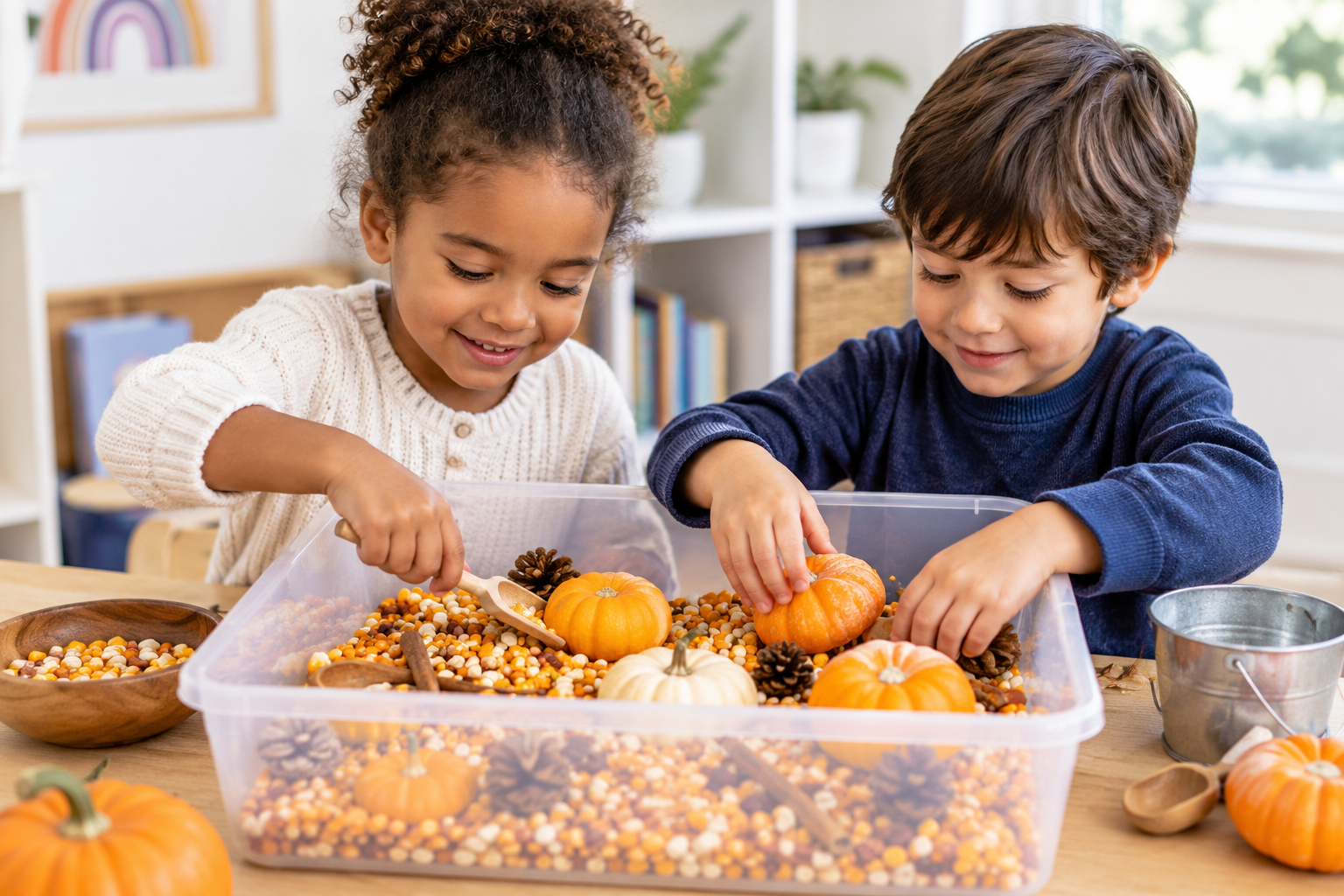
For younger children, give them a small pumpkin to touch, observe, and explore with a trusted adult. Older toddlers and preschoolers may enjoy examining the pumpkin’s exterior, comparing its texture with other fall materials, or helping scoop its contents with age-appropriate tools under close supervision.
What you will need:
- A small pumpkin or several larger pieces of pumpkin
- A shallow tray or washable surface
- Child-safe scoops or spoons
- A damp cloth for cleanup
How to make it engaging:
Invite children to describe what they notice. Is the pumpkin smooth or bumpy? Heavy or light? What does the inside look like? What happens when they press gently into the soft flesh?
Rather than directing every step, allow children time to explore independently while you observe, offer language, and follow their interests.
Developmental benefits:
Sensory play encourages curiosity, tactile exploration, and early scientific thinking. Describing textures and making observations also introduces new vocabulary and supports language development.
Caregiver tip: Always supervise sensory play closely. Pumpkin seeds and small pieces can pose choking risks, particularly for children under three. For infants and young toddlers, choose larger, securely held materials or explore the pumpkin visually and through gentle adult-guided touch.
2. Halloween Storytime and Imaginative Play
A favorite Halloween book can become the starting point for an entire afternoon of learning. Stories help children build vocabulary, recognize emotions, practice listening, and understand how events unfold.
Choose books that suit the child’s age, interests, and comfort level. For children who find spooky characters unsettling, look for gentle stories about friendly pumpkins, playful animals, or autumn adventures.
Try these simple ideas:
- Bring the story to life. Use different voices, facial expressions, and gestures to make characters memorable.
- Ask open-ended questions. Try asking, “What do you think will happen next?” or “How do you think the character feels?”
- Invite children to retell the story. Encourage them to describe what happened using their own words, toys, or drawings.
- Create a pretend-play extension. After reading about a pumpkin patch, turn a few stuffed animals and baskets into an imaginary pumpkin-picking adventure.
For infants, share sturdy board books, point to pictures, name familiar objects, and pause to allow time for cooing, babbling, and interaction.
Developmental benefits:
Reading together supports early literacy, listening skills, vocabulary, imagination, and social-emotional learning. When children retell stories or act out familiar scenes, they also practice sequencing, memory, and communication.
Most importantly, shared reading creates opportunities for connection. A cozy storytime can become a cherished part of a family’s fall routine.
3. Little Artists: Halloween Crafts Without the Pressure
Halloween crafts are a wonderful way for children to explore creativity, strengthen hand coordination, and express themselves. However, the goal does not need to be a perfectly finished pumpkin or a picture that looks exactly like an example. In fact, the process of creating is often more valuable than the final product.
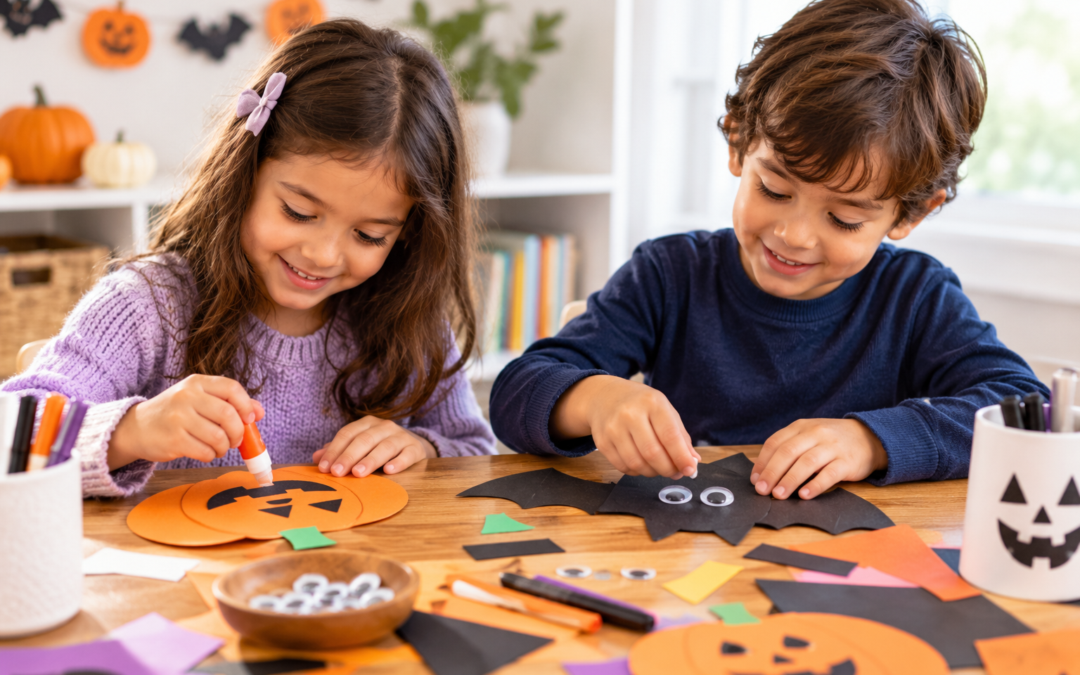
Try offering a simple invitation to create using orange and black paper, washable crayons, large stickers appropriate for the child’s age, or pre-cut shapes. Children can decorate a paper pumpkin, make a collage, or create their own interpretation of a friendly Halloween character.
How to encourage creativity:
- Offer a small selection of materials rather than a finished example to copy.
- Let children choose their own colors, shapes, and designs.
- Describe what you observe instead of evaluating the result. For example, “You used so many different colors!” or “Tell me about the face you made.”
- Allow children to participate at their own level, whether that means making marks with a crayon or carefully arranging shapes.
Developmental benefits:
Art activities can strengthen fine motor coordination, encourage decision-making, support self-expression, and introduce concepts such as color, shape, and pattern.
They also give children the opportunity to experience autonomy. When adults allow children to make creative choices without taking over, children learn that their ideas matter.
Caregiver tip: Choose age-appropriate, nontoxic materials and supervise their use. Avoid small craft pieces with children who may put objects in their mouths, and use child-safe alternatives to sharp scissors or other tools.
4. The Great Pumpkin Experiment
Halloween is a natural opportunity to introduce early science concepts through simple, hands-on discovery.
A pumpkin can inspire questions about size, weight, texture, seeds, and how plants grow. Children don’t need formal lessons to start thinking like little scientists. They simply need opportunities to notice, wonder, and investigate.
Try a pumpkin observation activity:
- Gather two or three pumpkins of different sizes.
- Invite the child to compare their appearance, shape, and weight with adult assistance.
- Ask which pumpkin they think is heavier or which one might roll farther.
- Explore the pumpkins together and talk about what you notice.
- Encourage the child to share their observations in their own words.
For preschoolers, you might introduce simple predictions: “What do you think we will find inside?” or “Do you think the bigger pumpkin has more seeds?”
There is no need to turn every question into a quiz. Give children time to think, experiment, and change their minds as they discover new information.
Developmental benefits:
These activities introduce observation, comparison, prediction, early math concepts, and problem-solving. They also nurture curiosity and help children understand that learning often begins with asking questions.
5. Halloween Pretend Play
Pretend play allows children to experiment with ideas, practice social interactions, and make sense of the world around them. Halloween offers endless opportunities for imaginative adventures, from running a pretend pumpkin patch to opening a friendly neighborhood costume shop.
Create a simple play invitation using a basket, a few stuffed animals, reusable shopping bags, and pretend food. Children can take turns being the shopkeeper, customer, pumpkin farmer, or delivery person.
For younger toddlers, keep the play simple. They may enjoy placing pretend pumpkins into a basket, carrying objects from one spot to another, or imitating familiar actions.
Older toddlers and preschoolers may create elaborate stories, assign roles, and develop their own rules for the game.
Developmental benefits:
Pretend play encourages imagination, communication, flexible thinking, and early social skills. When children negotiate roles or work through small disagreements, they also have opportunities to practice cooperation and emotional regulation with adult support.
Caregiver tip: Follow the child’s lead. Instead of directing the entire scenario, observe what they are creating and join in when invited. Your participation can enrich the experience without taking ownership of their ideas.
6. A Fall Nature Scavenger Hunt
Not every Halloween activity needs to happen indoors. October is an excellent time to explore the outdoors and discover the seasonal changes happening in the environment.
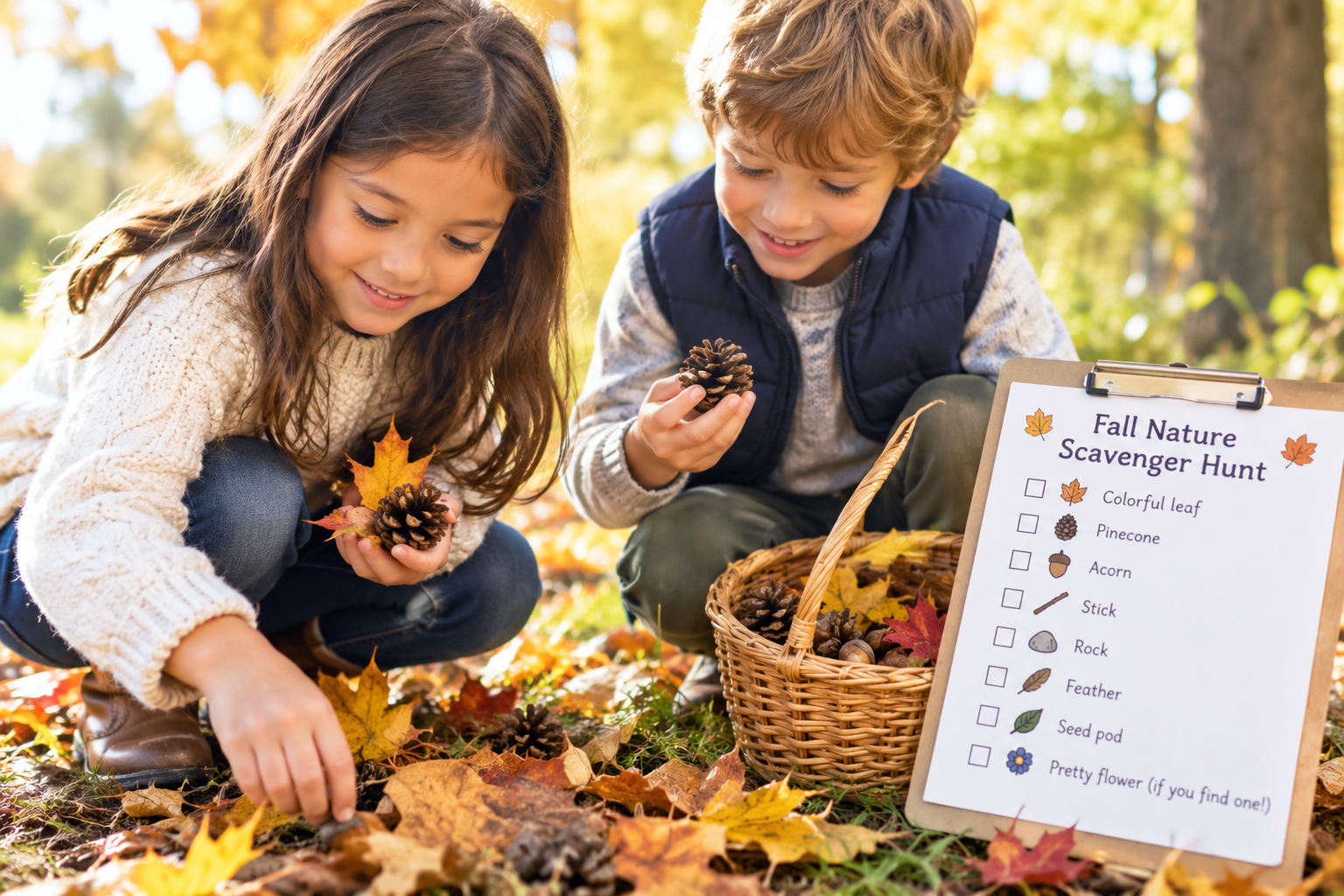
Take a walk around the neighborhood, visit a local park, or explore your own backyard. Invite children to look for colorful leaves, interesting tree shapes, pumpkins, or signs of seasonal change.
For younger children, keep the experience relaxed and focus on noticing what is around them. Preschoolers may enjoy a simple picture-based scavenger hunt that encourages them to search for a few specific items.
You can also turn the walk into a movement game. Pretend to walk like a friendly monster, jump like a little black cat, or flutter like a bat while moving through an appropriate outdoor space.
Developmental benefits:
Outdoor exploration supports gross motor development, sensory awareness, curiosity, and early environmental understanding. Walking, bending, reaching, and navigating different surfaces also provide opportunities to practice coordination and balance.
Fresh air and movement can be wonderful additions to a child’s daily routine, while shared exploration helps strengthen the connection between caregiver and child.
Caregiver tip: Choose safe locations, supervise children closely near roads and parking areas, and avoid allowing children to handle unknown plants, mushrooms, or potentially hazardous outdoor objects.
7. Making Halloween Feel Safe and Comfortable
Although Halloween can be exciting, not every child will enjoy every part of the celebration. Costumes, decorations, loud noises, unfamiliar people, and changes to everyday routines may feel overwhelming for some children.
Supporting children through these experiences begins with recognizing that their feelings are valid.
A child who dislikes a costume does not need to wear it. A toddler who feels uncertain about a decoration can observe it from a comfortable distance. A preschooler who does not want to participate in trick-or-treating can enjoy a different seasonal activity instead.
Nannies and parents can help children feel more confident by preparing them for what to expect, offering choices, and allowing them to participate at their own pace.
Try these supportive strategies:
- Introduce costumes and decorations gradually before a big event.
- Explain unfamiliar experiences using simple, reassuring language.
- Offer meaningful choices, such as selecting between two costumes or deciding which activity to try first.
- Acknowledge feelings without dismissing them. “That decoration surprised you. We can look at it together from here.”
- Respect a child’s decision to take a break or opt out of an activity.
These moments are also opportunities to model consent and body autonomy. Children should be allowed to decline uncomfortable costumes, unwanted physical affection, or participation in activities that feel overwhelming, within the boundaries of their safety and care.
Developmental benefits:
Responsive caregiving supports emotional security, self-advocacy, confidence, and the development of healthy boundaries. Children learn that they can communicate their feelings and that trusted adults will listen and respond thoughtfully.
Halloween should be an opportunity for joy, not pressure. When children feel safe and respected, they can explore the season with greater confidence.
How Nannies Can Make Seasonal Learning Meaningful
Professional nannies do so much more than keep children entertained. Thoughtfully planned activities can connect everyday experiences with a child’s developmental needs, individual interests, and emerging abilities.
When planning Halloween activities, nannies can consider the child’s age, temperament, current interests, and developmental stage. An infant may enjoy looking at high-contrast Halloween pictures, while a toddler may prefer filling and emptying a basket of large pretend pumpkins. A preschooler might be ready for a simple science experiment or an imaginative storytelling game.
Observation is just as important as preparation. Notice which materials capture the child’s attention, when they begin to lose interest, and how they approach new challenges. These observations can help caregivers adapt activities in ways that support each child’s growth.
Communication with parents is equally valuable. Sharing favorite activities, new discoveries, and developmental observations helps families stay connected to their child’s experiences throughout the day.
The most meaningful seasonal activities are not necessarily the most elaborate. Often, the greatest learning happens when a caregiver slows down, follows a child’s curiosity, and creates space for exploration.
A Little Halloween Magic Goes a Long Way
Halloween offers countless opportunities to combine seasonal fun with meaningful learning. From pumpkin sensory play and imaginative storytelling to outdoor adventures and creative projects, simple activities can nurture a child’s development while making October feel extra special.
For nannies and families, the key is to focus on the experience rather than the finished product. Follow the child’s interests, offer developmentally appropriate choices, and create an environment where curiosity, creativity, and confidence can flourish.
After all, the sweetest part of the season is not a perfectly decorated pumpkin or the most elaborate costume. It is the opportunity to share moments of discovery, laughter, and connection with the little ones in our care.
At Educated Nannies, we believe exceptional caregiving is rooted in thoughtful, intentional support that helps children thrive. This October, embrace the magic of everyday learning and let a little seasonal wonder inspire your next adventure together.
Happy Halloween from Educated Nannies!