
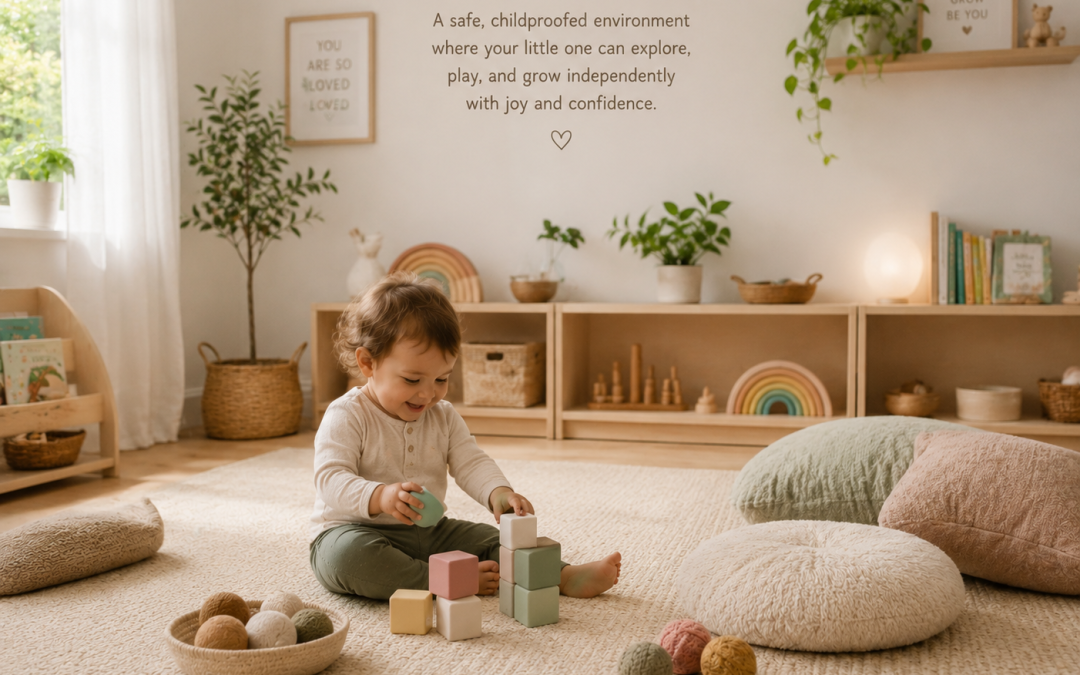
Summer brings longer days, more energy, and countless opportunities for children to explore their world. At Educated Nannies, we believe children learn best when they have the freedom to safely follow their natural curiosity. Whether children are spending their days with parents, nannies, grandparents, or at home between camps and activities, one challenge remains the same: children are naturally curious. They want to climb, touch, build, investigate, dump, pour, collect, create, and move. Exploration is part of life and learning!
As adults, it can sometimes feel like we’re constantly saying the following statements, especially if schedules are busy and we are managing a few tasks at once (Hello summer schedules)!
“No, don’t touch that.”
“Be careful.”
“Not there.”
“Put that down.”
While limits are an important part of childhood, constantly redirecting children can become exhausting for everyone involved. That’s where a “Yes Space” can make a tremendous difference.
A Yes Space is an environment intentionally designed so children can safely explore with minimal intervention. Instead of focusing on what children can’t do, a Yes Space emphasizes what they can do. The result? More independent play, fewer power struggles, increased confidence, and often a much more enjoyable summer for everyone!
What Is a Yes Space?
The concept of a Yes Space is simple: create an area where children can freely explore without hearing “no” every few minutes. Inspired by philosophies such as RIE® and concepts utilized in Montessori, a Yes Space is a thoughtfully prepared environment where children can safely explore, learn, and play with confidence.
A Yes Space doesn’t mean there are no boundaries. Instead, it means the environment has been thoughtfully prepared to support safe, age-appropriate exploration. When children know they can move freely within a space, they often become more engaged, creative, and confident. For caregivers, it reduces the need for constant correction and supervision of preventable hazards.
Why Yes Spaces Matter
Children learn through hands-on experiences.
When given opportunities to explore independently, they are developing:
- Problem-solving skills
- Creativity
- Decision-making abilities
- Gross and fine motor skills
- Confidence
- Persistence
- Independence
A well-designed environment communicates trust.
It tells children:
“This space was created for you.”
“You are capable.”
“You can explore safely here.”
These messages help foster both competence and self-esteem.
Creating an Indoor Yes Space
You don’t need an entire playroom or a perfectly curated home to create a Yes Space. Start by viewing your space from a child’s perspective.
Ask yourself:
- What is fragile?
- What is unsafe?
- What constantly requires adult intervention?
Whenever possible, remove temptations rather than relying on repeated reminders.
Include Open-Ended Materials
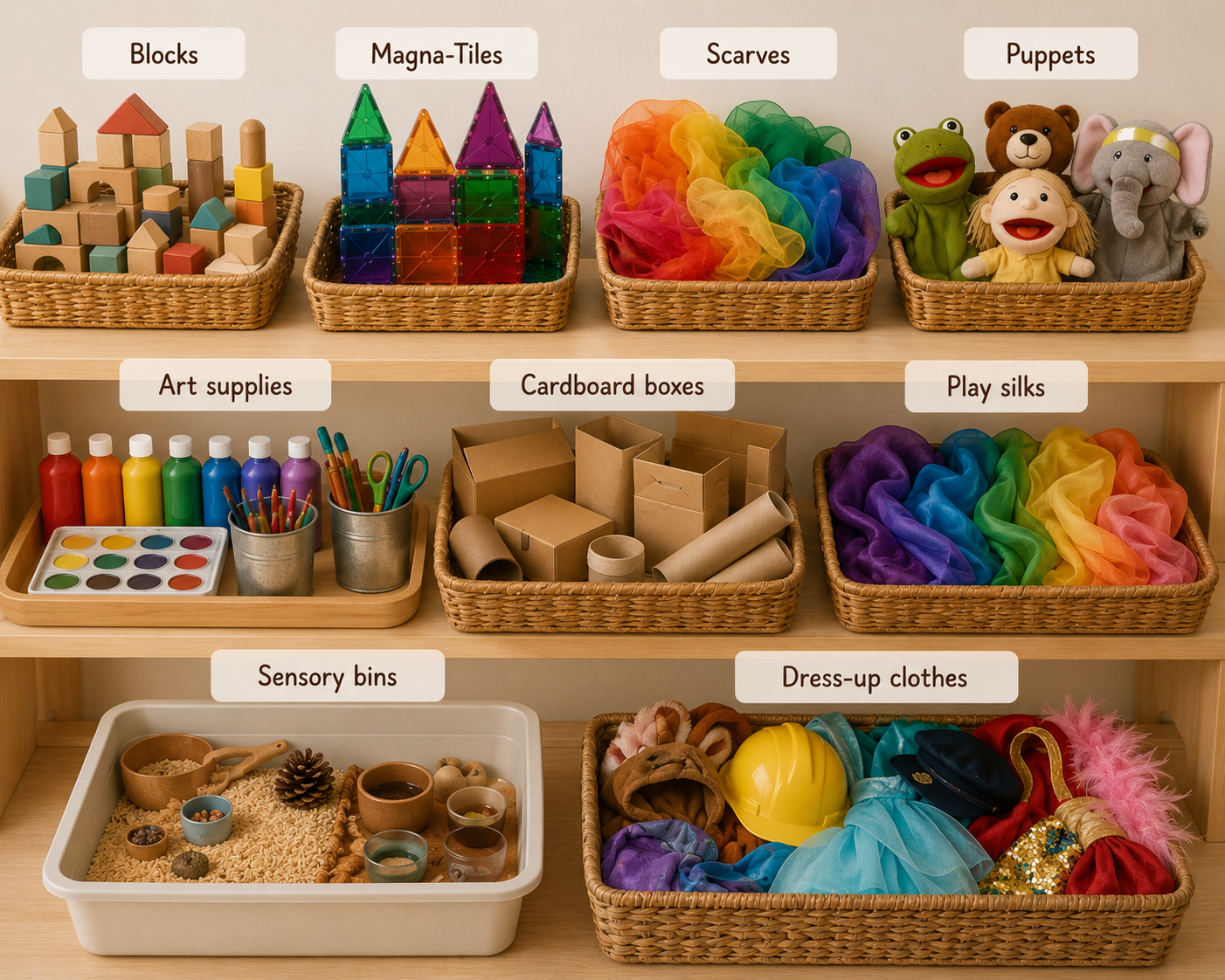
The best play materials are often the simplest. Consider offering:
- Blocks
- Magna-Tiles
- Scarves
- Puppets
- Art supplies
- Cardboard boxes
- Play silks
- Sensory bins
- Dress-up clothes
Open-ended materials encourage imagination because they can be used in countless ways.
Make Materials Accessible
Children are more likely to engage independently when they can easily access and return materials themselves.
Use:
- Low shelves
- Clear bins
- Child-height storage
- Simple labels or pictures
Accessibility promotes both independence and responsibility.
Create Cozy Spaces
Not all play needs to be active. Consider including:
- Reading corners
- Floor cushions
- Blankets
- Soft lighting
- Quiet sensory activities
Summer can be stimulating, and children benefit from spaces that support rest and regulation as well.
Bringing the Yes Space Outdoors
Summer is the perfect season to extend Yes Spaces into nature. Outdoor environments naturally encourage movement, creativity, and exploration.
Water Play Stations
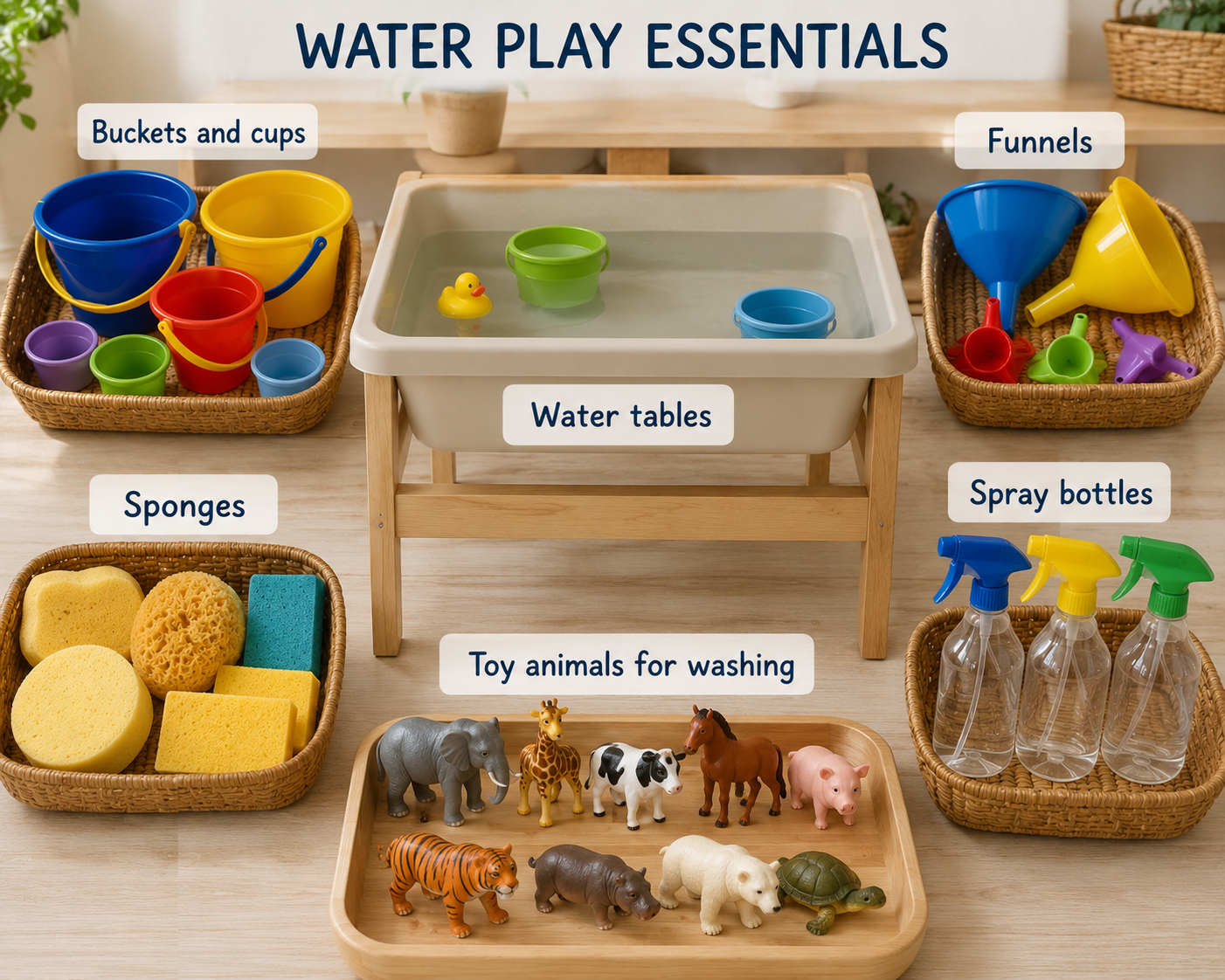
Simple setups can provide hours of engagement.
Try:
- Buckets and cups
- Funnels
- Sponges
- Water tables
- Spray bottles
- Toy animals for washing
Water play supports sensory development, problem-solving, and fine motor skills.
Nature Exploration Areas
Create opportunities for children to interact with the natural world.
Offer:
- Magnifying glasses
- Collection baskets
- Bug viewers
- Chalk
- Garden tools
- Nature journals
Children are often fascinated by rocks, leaves, insects, flowers, and clouds when given time to observe.
Loose Parts Play
Loose parts are materials that children can move, combine, redesign, and use creatively, and are appropriate in size, depending on age.
Examples include:
- Sticks
- Pinecones
- Logs
- Buckets
- Crates
- Fabric
- Stones
- Cardboard tubes
Rather than directing the activity, allow children to determine how the materials will be used.
One day, they may build a fort. Next, a restaurant or obstacle course.
Embrace a Little Mess
One of the biggest obstacles to creating a Yes Space is our desire for everything to stay tidy. Summer play can be messy.
Water spills.
Sand travels.
Paint splatters.
Mud appears in unexpected places.
Whenever possible, create environments where mess is expected rather than discouraged. A designated messy play area can provide freedom while protecting the spaces that need to remain clean. Often, the most meaningful learning happens when children are fully immersed in exploration.
Observe Before Intervening
One of the greatest gifts of a Yes Space is the opportunity for adults to step back. When children encounter challenges, our instinct is often to help immediately. Instead, try observing first. You may be surprised by what children can accomplish when given time to think, experiment, and problem-solve independently. Sometimes the most supportive thing we can do is simply provide the space and trust the process.
Small Changes, Big Impact
Creating a Yes Space doesn’t require a major renovation or expensive toys. It begins with a simple shift in mindset: designing environments that allow children to hear “yes” more often. When children are given safe opportunities to explore, create, and discover, everyone benefits. Parents and caregivers spend less time policing behavior, and children spend more time doing what they do best: playing, learning, and growing. This summer, consider choosing one area of your home, backyard, or play space and transforming it into a Yes Space. You may find that a few thoughtful changes lead to more independence, more creativity, and a whole lot more fun for all! ????