

Every family has a culture, whether it’s created intentionally or develops naturally over time. It’s found in the phrases everyone repeats, the traditions children look forward to each year, the values that guide daily decisions, and the small rituals that bring family members together. Family culture is what makes a household feel uniquely yours. Every family has its own special magic!
???? What Is Family Culture?
Family culture is the collection of values, traditions, routines, beliefs, and experiences that define life within your home. It influences how family members interact with one another, celebrate milestones, navigate challenges, and spend time together.
Maybe it’s the silly phrase everyone says at the dinner table, the annual holiday tradition your children count down to all year, Friday night pizza-and-movie marathons, or the way everyone piles into the kitchen to make colored pancakes on Sunday mornings. These moments may seem small, but together they create something powerful: your family culture.
As parents, it’s easy to focus on the big things like school choices, extracurricular activities, schedules, milestones, and future goals. But often, the moments children remember most aren’t the grand vacations or expensive outings. They’re the simple rituals, meaningful traditions, and everyday experiences that made them feel loved, connected, and like they truly belonged.
The best part? Building a strong family culture doesn’t require endless planning, a Pinterest-worthy home, or a packed calendar. It’s created through intentional moments, shared laughter, and traditions that reflect what matters most to your family.
At Educated Nannies, we believe childhood is built on connection, belonging, and meaningful experiences. The traditions you create today become the stories your children will tell tomorrow.
Here are a few simple ways to create a family culture your children will cherish for years to come.
???? Start with Your Family Values
One of the simplest ways to create family culture on purpose is to identify the values that matter most to your family. These values don’t need to be complicated. In fact, the most powerful values are often the simplest.
You might prioritize:
- Kindness
- Empathy
- Curiosity
- Gratitude
- Responsibility
- Honesty
- Adventure
- Creativity
- Community
- Connection
Once you’ve identified your family’s core values, look for ways to weave them into everyday life. Children learn values not through lectures, but through repeated experiences and observation. When a family consistently prioritizes kindness, gratitude, or curiosity, those values become part of the family’s identity. Over time, children begin to internalize those messages and carry them into the world.
☀️ Create Small Rituals That Bring Everyone Together
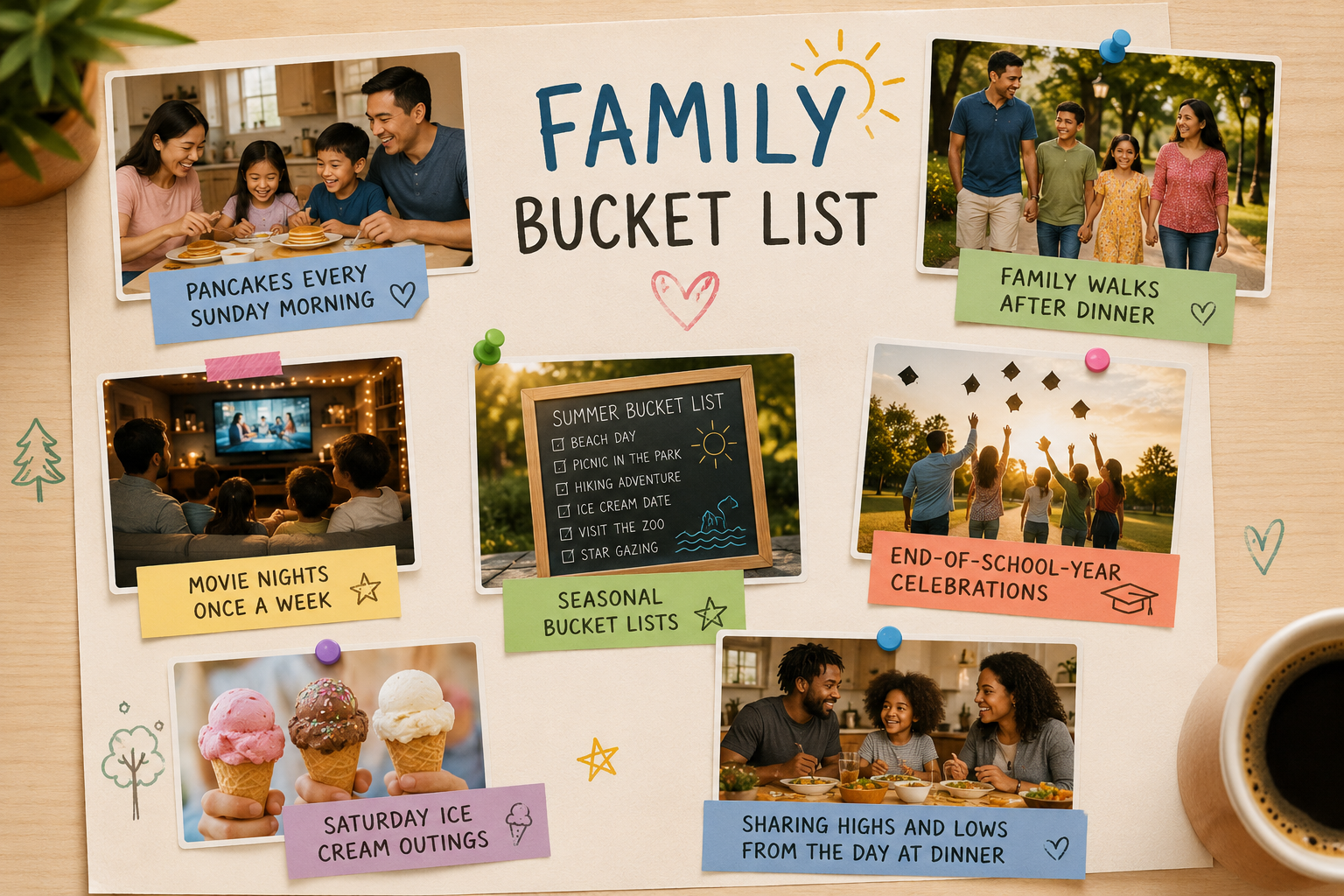
When people think about traditions, they often imagine holidays or special occasions. However, some of the strongest family traditions happen on ordinary days. Simple rituals create consistency and give children something to anticipate. They don’t need to be elaborate to be meaningful.
Consider creating traditions such as:
- Pancakes every Sunday morning
- Family walks after dinner
- Movie nights once a week
- Seasonal bucket lists
- End-of-school-year celebrations
- Saturday ice cream outings
- Sharing highs and lows from the day at dinner
These recurring moments help create rhythm and connection within the family. Over time, they become cherished memories that children associate with home.
???? Develop Family Sayings and Light-Hearted Inside Jokes
One of the most overlooked parts of family culture is language. Many families have phrases, jokes, nicknames, or words of encouragement that become woven into daily life. These small expressions often create a strong sense of belonging because they are unique to the family.
Perhaps it’s a phrase used before a big event, a saying repeated during challenging moments, or a playful expression that always makes everyone laugh.
While these moments may seem insignificant at the time, they often become some of the memories children treasure most. Years later, a simple phrase can instantly bring back feelings of comfort, connection, and family.
???? Prioritize Experiences Over Perfection
In today’s world, it’s easy to feel pressure to create picture-perfect family moments. Social media often highlights elaborate vacations, beautifully decorated celebrations, and carefully curated experiences. The reality is that children rarely remember whether everything was perfect. What they do remember is how they felt.
Many of the most meaningful family memories come from simple experiences: beach days, road trips, backyard picnics, game nights, baking cookies together, or spontaneous adventures. These shared moments create stories that become part of a family’s collective identity. Family culture isn’t built through perfection. It’s built through participation.
???? Use Summer as a Time to Strengthen Family Culture
Summer provides a wonderful opportunity to intentionally create family traditions and memories. With school routines on pause, many families have more flexibility to spend time together and explore new experiences. This season offers countless opportunities to build traditions that children may carry with them for years.
Consider creating a summer family bucket list, establishing a weekly outing, starting a family volunteer project, hosting neighborhood gatherings, or creating simple traditions around beach days, camping trips, or summer evenings. The goal isn’t to fill every moment with activities. Instead, it’s about creating shared experiences that foster connection and strengthen family bonds.
???? The Role of Nannies in Family Culture
For families who work with a nanny, caregivers often play an important role in supporting and reinforcing family culture. Whether helping maintain family traditions, encouraging family values, celebrating milestones, or participating in special routines, nannies become part of the daily experiences that shape childhood.
A skilled nanny understands that caregiving extends beyond supervision. By supporting a family’s unique traditions and values, they help create consistency and strengthen the sense of connection children experience at home. When caregivers and parents work together to reinforce a family’s culture, children benefit from a cohesive and supportive environment.
???? The Legacy of Family Culture
Long after children forget what they received for a birthday or what grade they earned on a test, they often remember how their family made them feel. They remember the traditions. They remember the inside jokes. They remember the annual trips, the bedtime routines, the special celebrations, and the values that guided their family. These experiences become part of their story.
Creating family culture on purpose isn’t about adding more to your to-do list. It’s about recognizing that the small moments happening every day are already shaping your family’s identity. By being intentional about the traditions, values, rituals, and connections you cultivate, you can create a family culture that helps children feel loved, grounded, and deeply connected.
At Educated Nannies, we believe that childhood is built in the everyday moments. The traditions you create today may become the memories your children cherish for a lifetime, and the family culture they one day pass on to future generations. ????????